


If you’ve ever strolled through the kitchens in UCLA’s university apartments or wondered what’s possible beyond microwaved noodles, you’re going to want to meet Hamza Khan, a fourth-year data theory student with a minor in bioinformatics who is proving that college cooking can be for more than just survival. For Khan, food isn’t just fuel, it’s an art, a science and a way to build community.
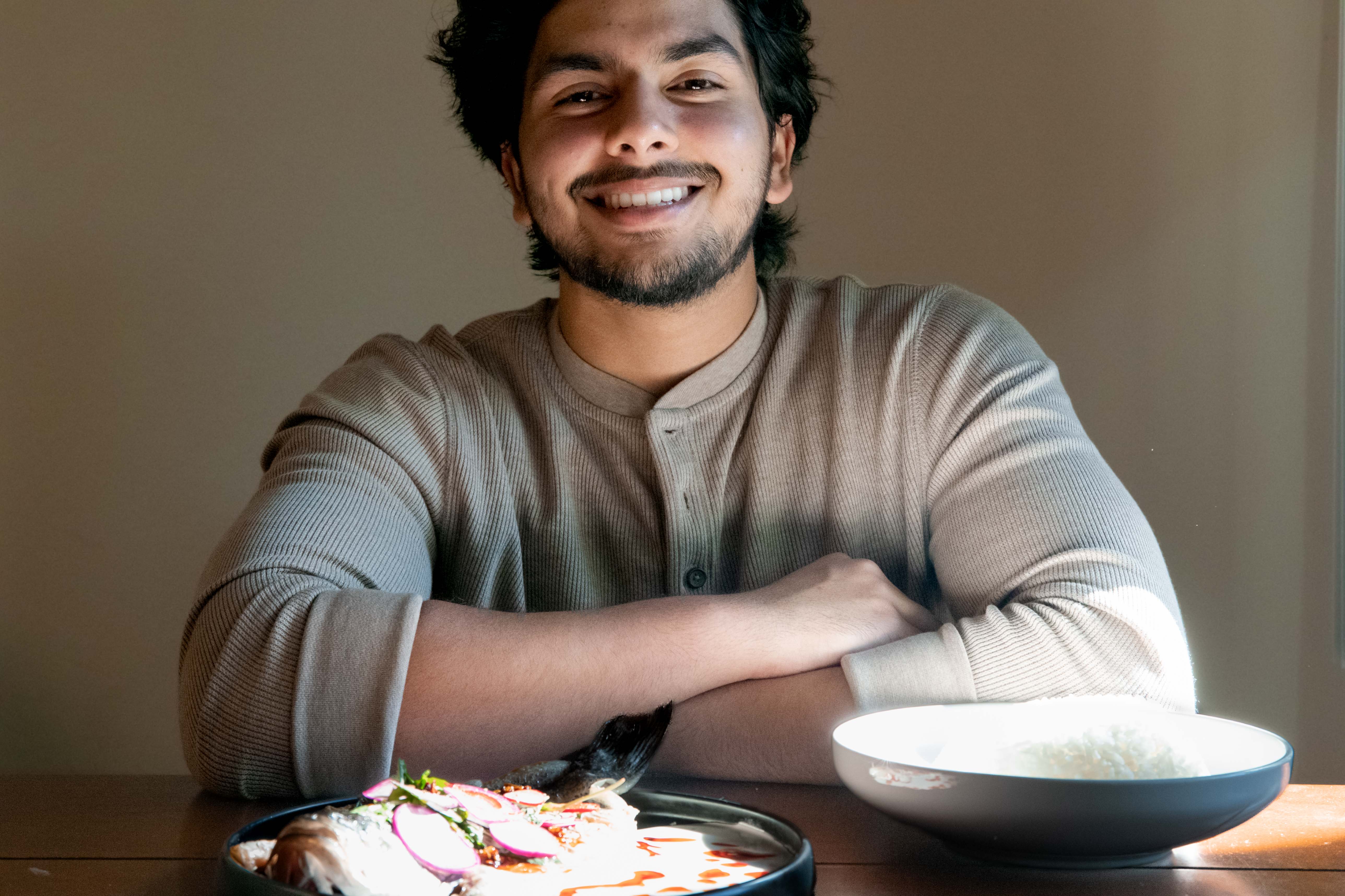
Now a UCLA alumnus, Khan continues to follow his passion for creating meals, with a sandwich shop in the works. Photographed by Julia Gu/BruinLife.
Khan’s journey into cooking wasn’t sparked by a single dish or a famous Food Network show. It began right at home, in the heart of his family kitchen. “Growing up, I was surrounded by excellent cooks and delicious foods,” Khan said. “My sister, mother, uncle and aunts all served as big inspirations. Seeing them meticulously plan menus for family events like Thanksgiving, obsessing over the finest details, fostered an appreciation for food in my mind.” That quiet, everyday magic gradually drew him in. Eventually, he picked up the knife too and never looked back.
When COVID-19 hit and time slowed down, Khan found the perfect opportunity to dive deeper. With no distractions and plenty of time, he began experimenting more seriously and developing a cooking style that’s equal parts creative expression and cultural homage.
While at UCLA, Khan sticks to a steady rhythm: a basic but beloved breakfast of eggs, some kind of legume and some kind of carb. “I eat the same breakfast every day in different fonts,” he said, “but I don’t get sick of it.” Eggs, in his view, are nothing short of magical. “Eggs are a freakin’ miracle and probably one of my favorite foods. Bread is the single best invention of humans. So the marriage of the two is something I celebrate every morning or afternoon, depending on when I wake up.”
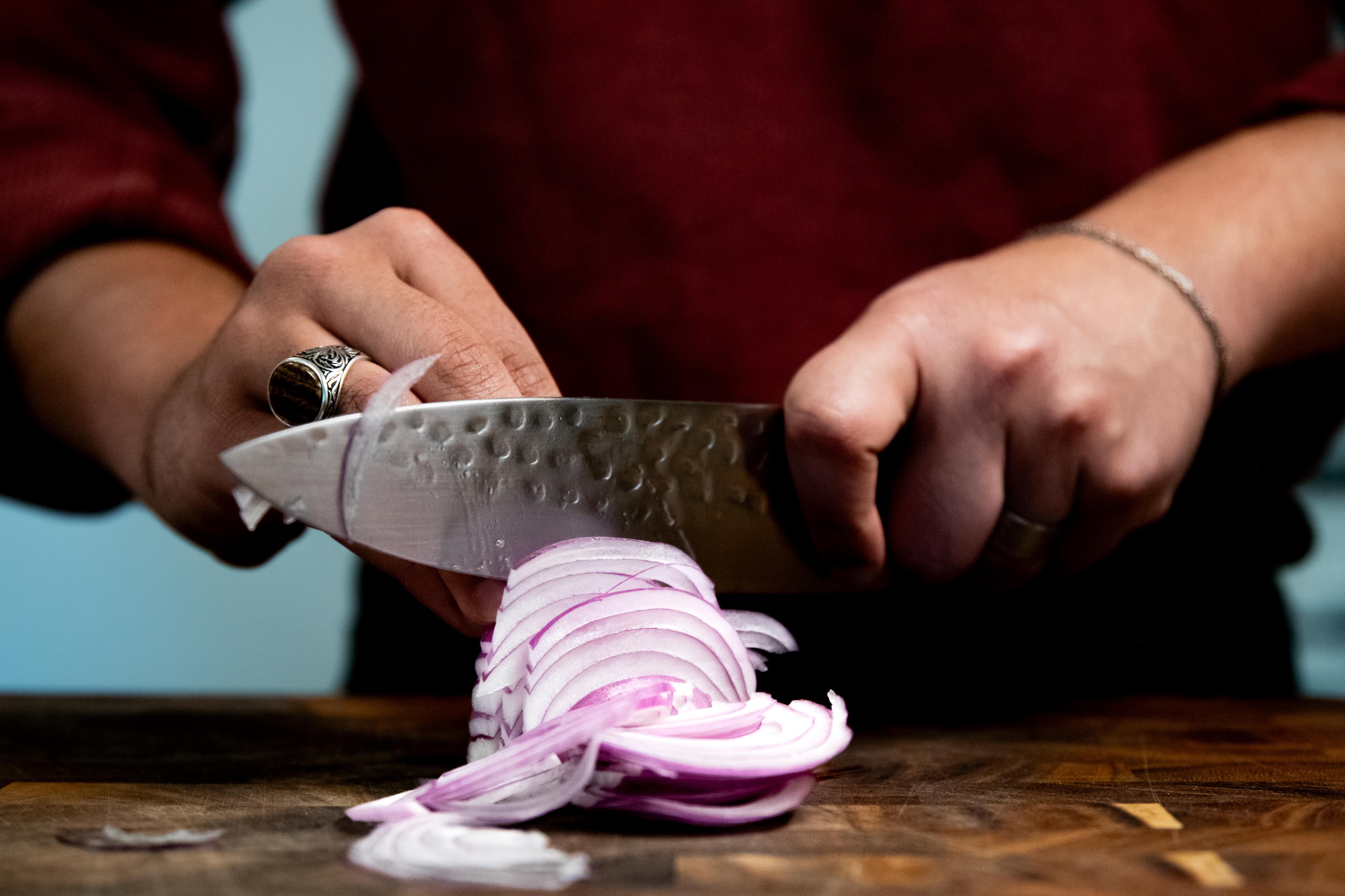
Khan, a Bruin with a passion for cooking, preps onions for a quick salsa. Photographed by Khaled Al Duwaikat/BruinLife.
Lunch and dinner during the week are quick and functional salads, sandwiches and the occasional shared bites with roommates. But when he’s back home, things change. Khan dives into what he calls “food projects,” which are cooking experiences that occur around four times a week over multiple days where he explores new techniques, challenges himself creatively and builds complex dishes from the ground up. These aren’t just meals; they’re learning opportunities. The final products? Shared with his mom and brother, turning the process into something personal, fulfilling and communal.
When asked what cooking means to him, Khan didn’t hold back. “Cooking and food is my life. It’s my primary outlet for creativity, a means of learning history and cultures, an application of chemistry and an expression of love. And ¾ of all the media I consume.” It’s not always easy. There are moments of frustration, bitter flavors that won’t go away and recipes that just don’t land. “But it’s also a great source of pride. Being able to make something with your own hands, feed it to someone and make them smile – that’s a beautiful power within all of us.” For Khan, food is the thread that connects him to others. “We all eat. That shared experience is how I bond with people.”
When asked about his favorite cuisine, Khan paused – not because he doesn’t have an answer but because it’s not a simple one. “Favorite cuisine is a tricky question,” he said. “Bigger countries always have an advantage because a single label like ‘Chinese’ can encompass a huge range of dishes and ingredients.” But if he had to choose, it’s Mexican hands down.
He’s captivated by the diversity: the fresh, coastal dishes full of citrus and seafood; the rich, deeply spiced braises from central cities like Oaxaca and Guadalajara; the layers of cultural influence that have shaped Mexican cuisine over centuries. “It’s food I’ve been eating my whole life and still can’t get over or stop learning about,” Khan said. “As a Californian, I could eat it every day for the rest of my life.” And don’t get him started on maize. “What they do with corn will never cease to blow my mind.”
But Khan’s Desi roots run just as deep. One of his go-to comfort dishes is green keema, a vibrant blend of ground beef, spices, herbs and citrus that brings back memories of his childhood kitchen.
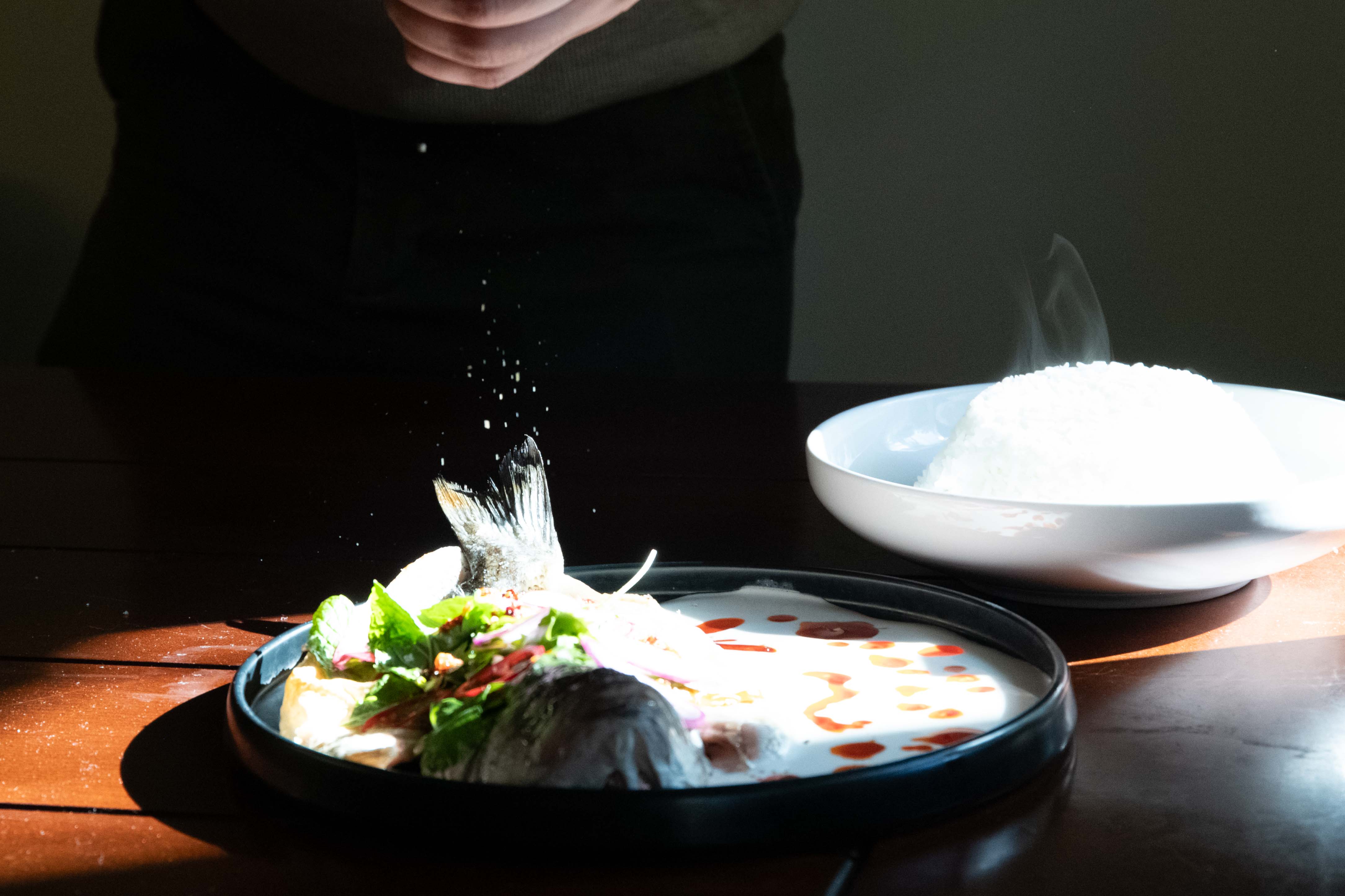
Khan grinds salt as a finishing touch to a dish with layers of flavors. Photographed by Julia Gu/BruinLife.
Khan’s day-to-day meals may be routine, but his creativity comes alive when he’s cooking for those he loves or experimenting with new ideas. He shares the results with his family, roommates and friends – and even posts his recipes and kitchen creations on his food Instagram page @asideof__.
So what does cooking mean to Khan? Everything from culture and chemistry to community and connection.
Khan said he hopes more students use the kitchens in the university apartments and on the Hill. He believes that cooking, even something small, can bring people together. “Start with what you love. Recreate a childhood dish or something familiar. You don’t need expensive ingredients, just patience and a little curiosity.”
For beginners, his tips are simple but golden:
- Don’t cook on high heat unless you want a fire drill.
- Don’t oversalt (and use kosher salt – trust him).
- And most importantly: just start.
When he’s not dreaming up new dishes, Khan is likely raiding the fridge for his go-to midnight snack: fruit. “Nature is a better cook than humans will ever be,” he said. Whether it’s cold berries, winter pomegranate or juicy summer mangoes, fruit always hits the spot. “It’s like the sensation of cold water at 4 a.m. but sweeter,” he said – refreshing, simple and deeply satisfying.
Of course, not every kitchen moment ends in success. One of Khan’s most memorable disasters? “I was rendering a ton of chicken fat on the stovetop and unknowingly left the burner on,” he said. “The fat and skin burned, the whole house smelled of burnt chicken for days and my mom got really mad at me.” Since then, it’s become an inside joke at home. “Now, anytime I try to save fats in the freezer to render later, she secretly throws them out.” It’s a classic lesson in kitchen humility, and Mom always wins.
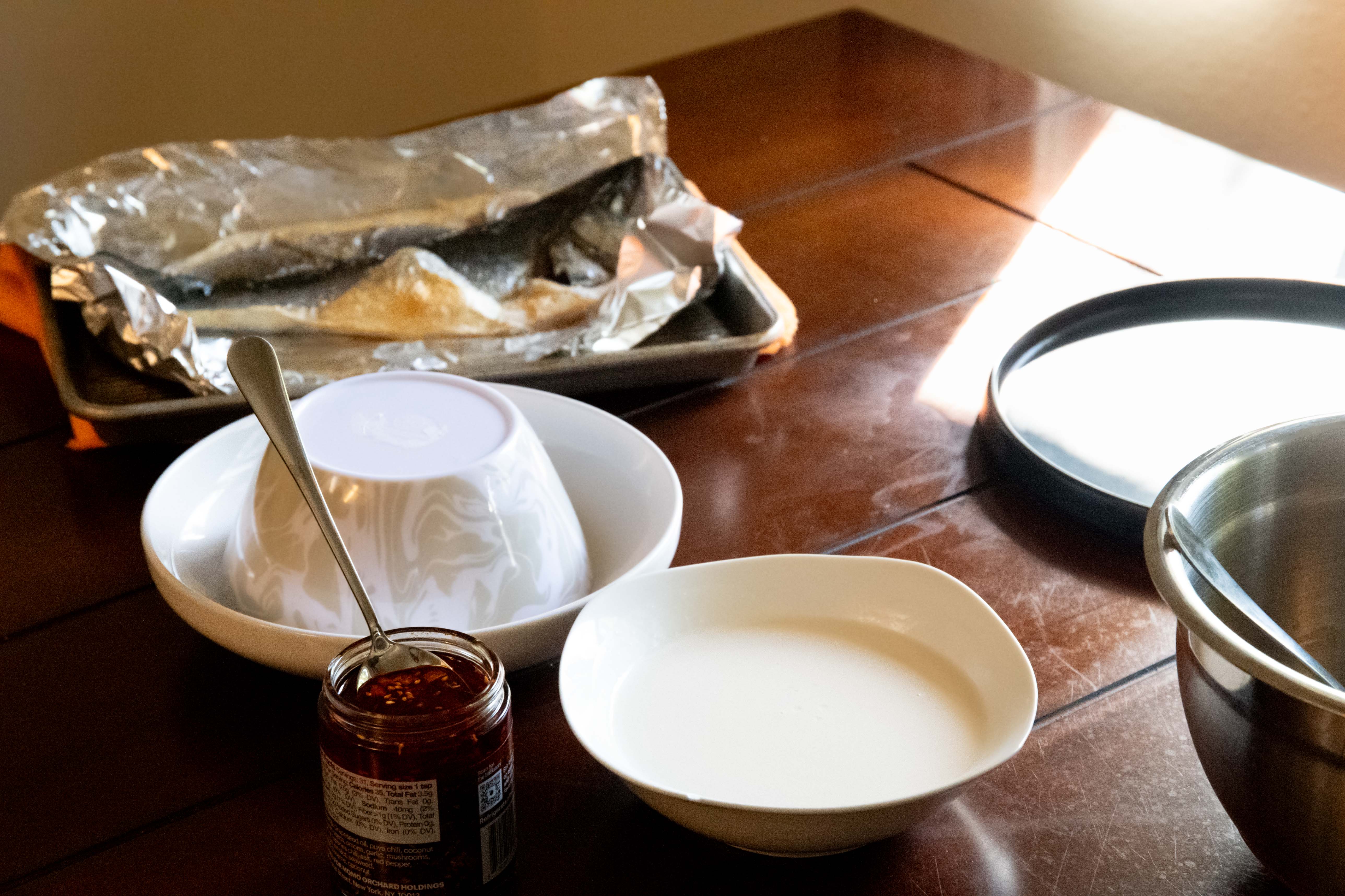
With all components broiled, steamed and pickled, only plating remains, which is in itself an art. Photographed by Julia Gu/BruinLife.
While Khan loves exploring new techniques and cuisines, not every request excites him. “It physically pains me when someone asks for creamy pasta or birria again,” he said. “It’s not that those dishes aren’t good; they’re just not exciting to make. Pouring cream into a pan doesn’t spark the same joy as building flavor from scratch.” Still, he’ll make them with care when asked because to him, cooking is also about generosity and creating comfort for others. “No food shaming. Ever.”
Whether he’s cooking solo to think out loud or laughing with friends over a stovetop conversation, Khan sees food as more than what ends up on the plate. It’s a way to connect to culture, creativity and community. For students who feel too busy or intimidated to cook, he said, “Start with what you know and love. Even the simplest dish can become something special.”
And if you’ve never tried Desi food? “Make chana masala,” he said. “It’s simple, it’s nourishing and it teaches you everything you need to know about flavor. I eat it with roti, and honestly, I’d take that over any brunch in LA.”
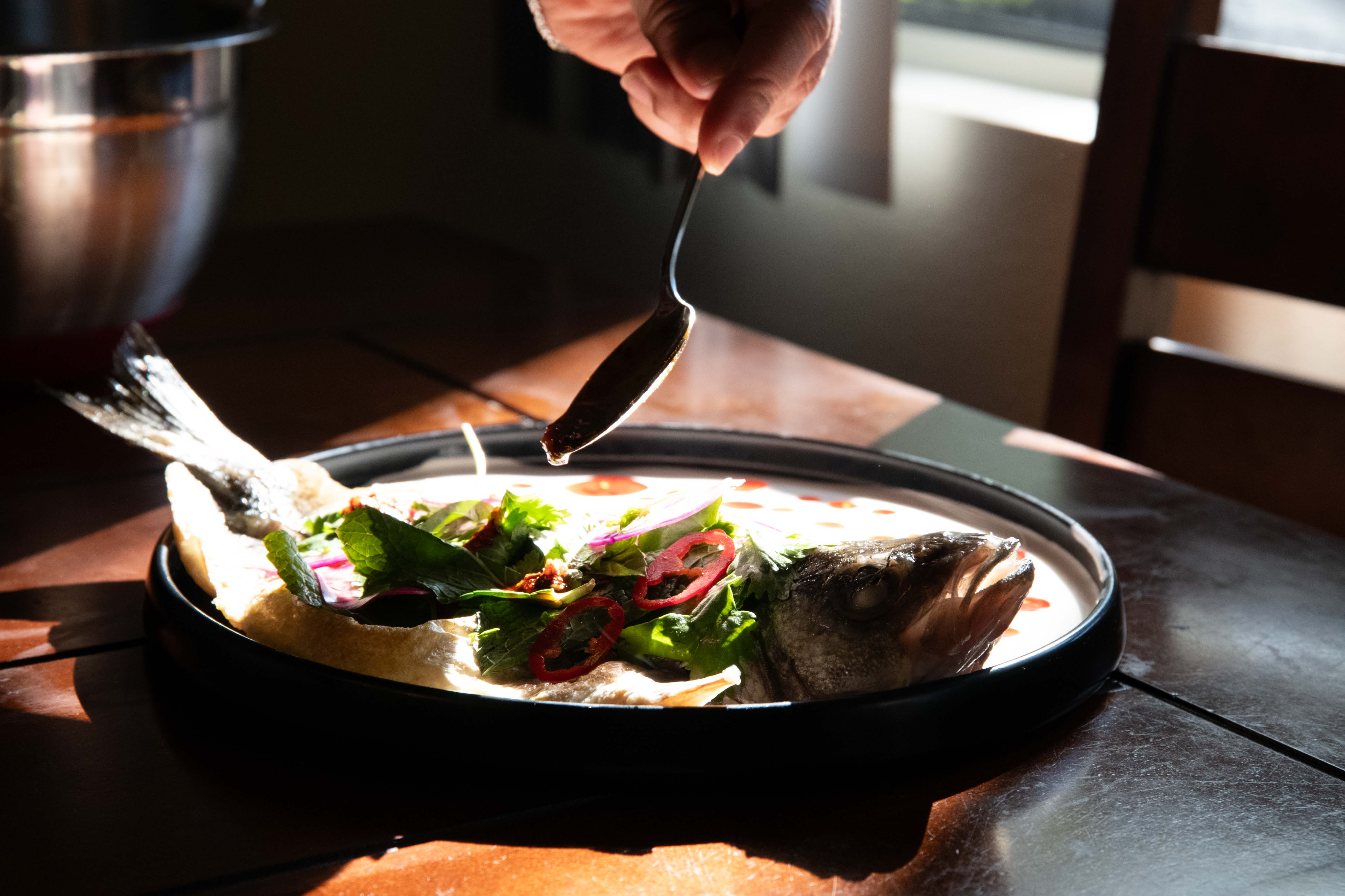
Khan adds drops of chili oil to the coconut curry with care. Photographed by Julia Gu/BruinLife.
Because in the end, for Khan, cooking isn’t just about what’s on the plate. It’s about the story behind it. And if his journey proves anything, it’s that the kitchen isn’t just where food is made – it’s where connection is born.
