


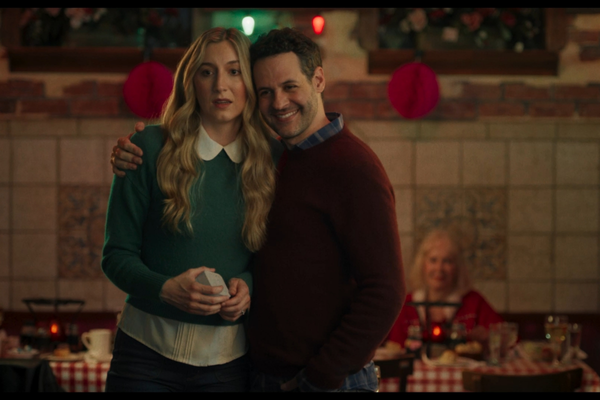
“Lets Call The Whole Thing Off” starring and directed by Elizabeth Guest, captures a universal and relatable breakdown on modern romance. Released Oct. 18 and screening at the Laemmle NoHo 7 from Dec. 12 to 18, the film follows an awkward post break up that is heartwarming, yet tumultuous. When love addict Lydia, played by Guest, meets calm and put together Tim, played by Andrew Leeds, she was all in…until she wasn’t. The film transforms misery into comedy, shoving uncomfortable and emotional chaos into the audience that is deeply familiar.
Warning: This review contains spoilers
“Lets Call the Whole Thing Off” observes Guest’s love addiction and her inability to be alone. Co-star and ex-lover, Leeds, embraces his vulnerability, creating a painfully recognizable feeling to anyone who has experienced avoiding or yearning for love. Guest’s direction succeeds in balancing the confusing and cringy experiences which happen during a breakup — even making me more self-aware of my own.
Rather than offering a simple closure, the film offers emotional realism and authenticity. It presents moments that are embarrassingly revealing and jagged. The emotional inconsistency is what makes the film raw and unique compared to other rom coms. Guest introduces the characters that are each emotionally charged, navigating life with no clear map. There is an unexpected family structure surrounding Lydia’s character with a four-parent household that is blended and communal. Without adding heavy explanations and dramatic monologues, Guest proposes this unconventional family dynamic that fits directly into the film’s broad theme of endings that transform instead of destroy.
The film does an amazing job accurately capturing the backpedaling and sincere confessions that come with falling out of love. Every awkward conversation and nervous explanation is felt and makes you want to grab Lydia through the screen. At one point, a conversation occurs that does not break this story, but instead features a surprising and emotional tone that makes you wonder if this couple’s story is actually over.
Love addiction is closely explored through Lydia’s character and is revealed in her behavior. She impulsively over analyzes her love life and attempts to find a partner while simultaneously running away from it. She yearns for an attachment with self awareness that doesn’t feel exaggerated. Tim’s role is equally relatable in a calm and quiet way. He avoids discomfort in order to prevent heartbreak and is addicted to a love that is comfortable and feels like a routine. With one individual hoping to avoid difficult conversations and still get clarity, the other borderline desperate to understand where things went wrong, the couple reveals a universal dynamic that reflects real life relationships.
A standout moment within the story is how Guest avoids the cinematic and dramatic version of a breakup audiences are used to. She shows an unraveling situation where two people are living contradictions that are dismissive but wounded and indecisive but certain all at the same time. The film is powerful because it reveals Lydia and Tim attempting to figure out their own confusion, reminding the audience of times we’ve protected our pride or hoped for the clarity to come as suddenly as the heartbreak can. The regretful moments of not saying what we wanted to say or the contradictions that flow through our heads even after moving on. It is a slow-burn process of how people try but usually fail to explain themselves to each other.
But the characters symbolize more than just a lesson, however, as they also act as a visual of two people who are indecisive and downplay feelings even though they are extremely clear. Guest provides more emotion than a typical story about falling out of love by exploring the lingering humanity that one feels in this situation. She successfully illustrates how these attachments can complicate closure.
“Lets Call the Whole Thing Off“ is impressive due to its honesty; the characters don’t attempt to resolve every emotional issue and instead prove how embracing ambiguity can still lead to some sense of clarity. With situational humor and emotional authenticity, the film presents the tenderness of relationships that don’t always work but still matter. The film is proof that the easy answers to our love lives remind us that even the most damaging endings still reveal something human and honest. Just like Lydia’s character says, “A love addict is someone who really needs love the way an alcoholic really needs a drink”. And after this movie, you might just find yourself yearning for both.
__
Featured Image Courtesy of Austin Film Festival
