

- A roll with a hole and a whole lotta heart: A California bagel story
- A roll with a hole and a whole lotta heart: A California bagel story — The bagel that won the West
- A roll with a hole and a whole lotta heart: A California bagel story — a deli of sorts
- A roll with a hole and a whole lotta heart: A California bagel story — These are your grandpa’s bagels
- A roll with a hole and a whole lotta heart: A California bagel story — Gefilte fish sucks, but bagels don’t have to
- A roll with a hole and a whole lotta heart: A California bagel story — no forks given
- A roll with a hole and a whole lotta heart: A California bagel story — a bagel a day
- A roll with a hole and a whole lotta heart: A California bagel story — food is like time travel
- A roll with a hole and a whole lotta heart: A California bagel story — born and bread
- A roll with a hole and a whole lotta heart: A California bagel story — Jew-ish
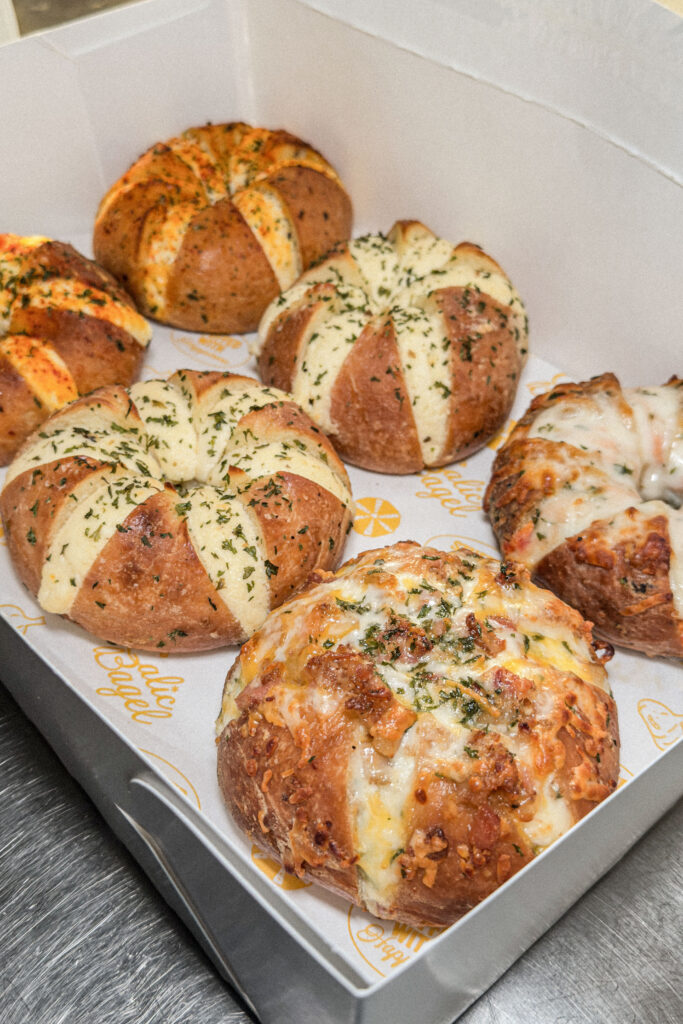
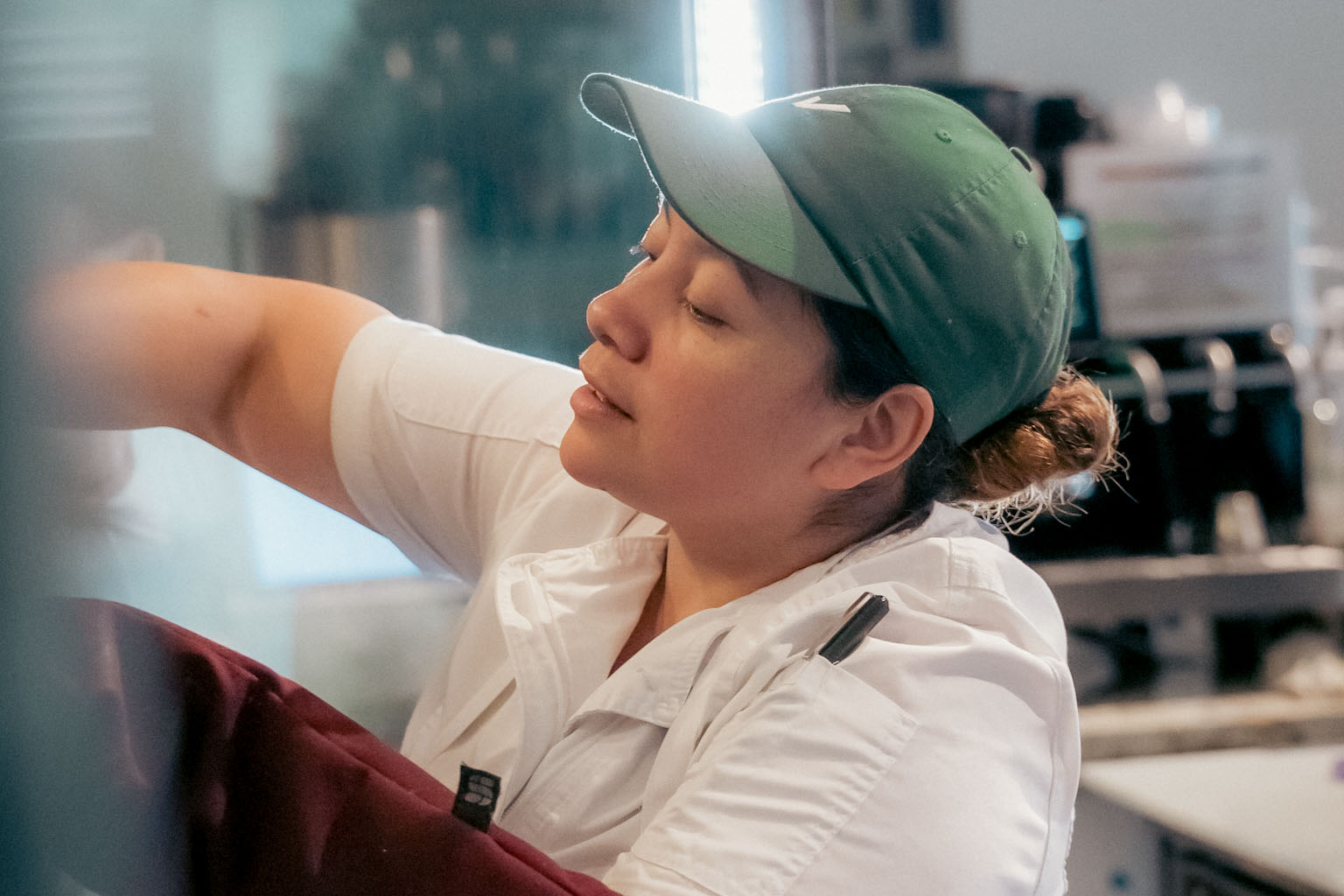
I sit and search “B-A-G-E-L” in my camera roll. Forgotten images from that winter in New York when I went to Russ & Daughters and Apollo Bagels, my personal favorite bagels in Gotham, auto populate the touch screen of my iPhone. There’s Hank’s, Maury’s Bagels, Yeastie Boys, even that continental breakfast I snagged from the Hyatt while I was off and away covering the 2025 Austin Film Festival for my college publication. But these weren’t the memories I was looking for. I wanted to find the place on Eighth and Hoover whose lavish green and brightly lit, welcoming storefront contrasted the almost non-existent parking; the place Joey, Piesner and I went during one of our fleeting summers together. Remembering there was pepperoni on one of the rolls, I searched “P-I-Z-Z-A” — still nothing. So I type out “B-R-E-A-D,” and sure enough, cluttered amongst stills of sourdough, matzo, al pastor street tacos and beignets, I find it — Calic Bagel. My smartphone didn’t recognize these as bagels, and I can’t say I did when I first encountered them either. I, like Nick Schreiber of Belle’s Bagels or Trevor Faris of Hank’s, default to a lox bagel — it’s called Bagel and Lox Jewishness for a reason, right? A “Calic” isn’t your typical sliced and schmeared sandwich. It’s more of a monkey bread situation; you rip and dip to reveal a sweet cream cheese center stuffed into a garlic butter-basted roll, which carries the flavors and texture I’d want from the free, unlimited appetizer at an Italian restaurant as opposed to the Jewish deli classic. But just how Joan Didion made the point of how Sacramento, despite its peculiarities, IS a Valley town, while Calic Bagel isn’t the bagel of lox and capers, it IS a bagel. Bagels, in the Jewish sense, originated in 17th century Poland after an antisemitic law was passed forbidding Polish Jews from baking bread. In order to maintain their livelihoods, Jewish bakers began to boil their bread before baking it as a means to circumvent these restrictions. Throughout the centuries of its existence, the bagel continues to be a creative and delicious form of problem-solving. When Jewish families moved out west and into the suburbs, the bagel emerged as a cultural symbol that kept them in touch with their heritage. In Los Angeles specifically, the Ustins pioneered the Western Bagel to fit the taste buds of its new environment. And as time slows down into the 21st century, individuals such as Trevor Faris of Hank’s, Nick Schreiber at Belle’s and Jason Kaplan from Maury’s continue to innovate on the foundational role of this foundational roll, as a means of sharing their perfect bagel with the world. At Calic Bagel, this notion is no different. Olivia Zepeda, Calic’s head baker, told me that bagels were not their original intention but the solution to LA’s on-the-go atmosphere. She met Calic’s founders, Alex and Sun Sohn, during the pandemic, stuffing six-inch sourdough breads dipped in their garlic butter sauce. But once the world opened up again, customers weren’t looking to eat half a foot worth of sourdough. And little bit by little bit, Zepeda told me that’s why we started experimenting with bagels; as a way to introduce the Calic-stuffed flavors into individual servings. Where the smaller-sized sourdoughs just became dry and looked unappealing, stuffed bagels allow eaters to pull the pieces out and eat it while they’re driving. Rip and dip style bagels are nothing new. Kyle Glanville, co-owner of Mustard’s Bagels, said one of his favorite preparations is a piping hot bagel that he rips and dips in butter. Even back East where bagels are at their most traditional, in America anyhow, the “Bagel Tax” put an 8.875% sales tax on prepared goods, raising the price of the traditionally affordable bagel sandwich. So in response, rip and dip bagel pop-ups, like PopUp Bagels, began to sell whole, uncut bagels with a side container of cream cheese for customers to dip them in. On these back East bagels, Zepeda views them as dense and rubbery, an eating experience that would not easily support a stuffed roll. That’s why a Calic bagel uses the tangzhong method from Asia to develop a chewier and softer product that conveys a variety of textures. With no more need for utensils, I asked Zepeda about the flavor innovations that allow for what their website defines as the “next generation of bagels.” And just as the Jews are a diasporic people, it stands to reason this trait would be inherited by their food. Just one look at Calic’s menu tells a story of flavor combinations through immigration. The preparation is inspired by Asian baking techniques from Calic Bagel’s founders. Their Elote Calic is inspired by the bakery’s general manager, who is half Guatemalan and half Mexican. One menu item, if not the most popular, is their Habanero Calic, which comes from Zepeda’s Guatemalan heritage and love of spicy food. In crafting this combination of roasted hot peppers and sweet cream cheese, her boss was surprised to learn that it wasn’t only Koreans who eat spicy food; a fact that baffled Zepeda since she thought the same about Guatemalans. So Zepeda’s boss brought in a spicy rice cake dish that was too spicy, even for her. I did not initially recognize these stuffed Calics as a kind of bagel. Growing up in my Jew-ish household, I was raised in the culture that saw this boiled bread as an everything bagel, slathered in whipped schmear and topped with Kirkland smoked salmon — that’s it. While there are definitely worse things to be close-minded about than the preparation of my breakfast sandwich, I still did not accept this pull-apart iteration based in the tangzhong baking method with Guatemalan-inspired habanero cream cheese as the same food I’ve come to hold so dear — as delicious as a stuffed Calic is. But just how Zepeda and her boss learned that every culture can relate over a shared love of spicy foods, through learning about the importance and innovation that went into stuffing these bagels, they became the solution to my problem of bagel prejudice. While their bagels are only the size of my hand, these flavors span the globe through their deliciously multi-ethnic inspiration because: “What better way to unite people than through food?” – Zepeda
Chapter seven: No forks given
Question: Why make bagels in the first place?
Answer: As the solution to a problem.
Question: Why make bagels in the first place?
Answer: As the solution to a problem.
Question: Why make bagels in the first place?
Answer: As the solution to a problem.
Question: Why make bagels in the first place?
Answer: As the solution to a problem.